
Hello,
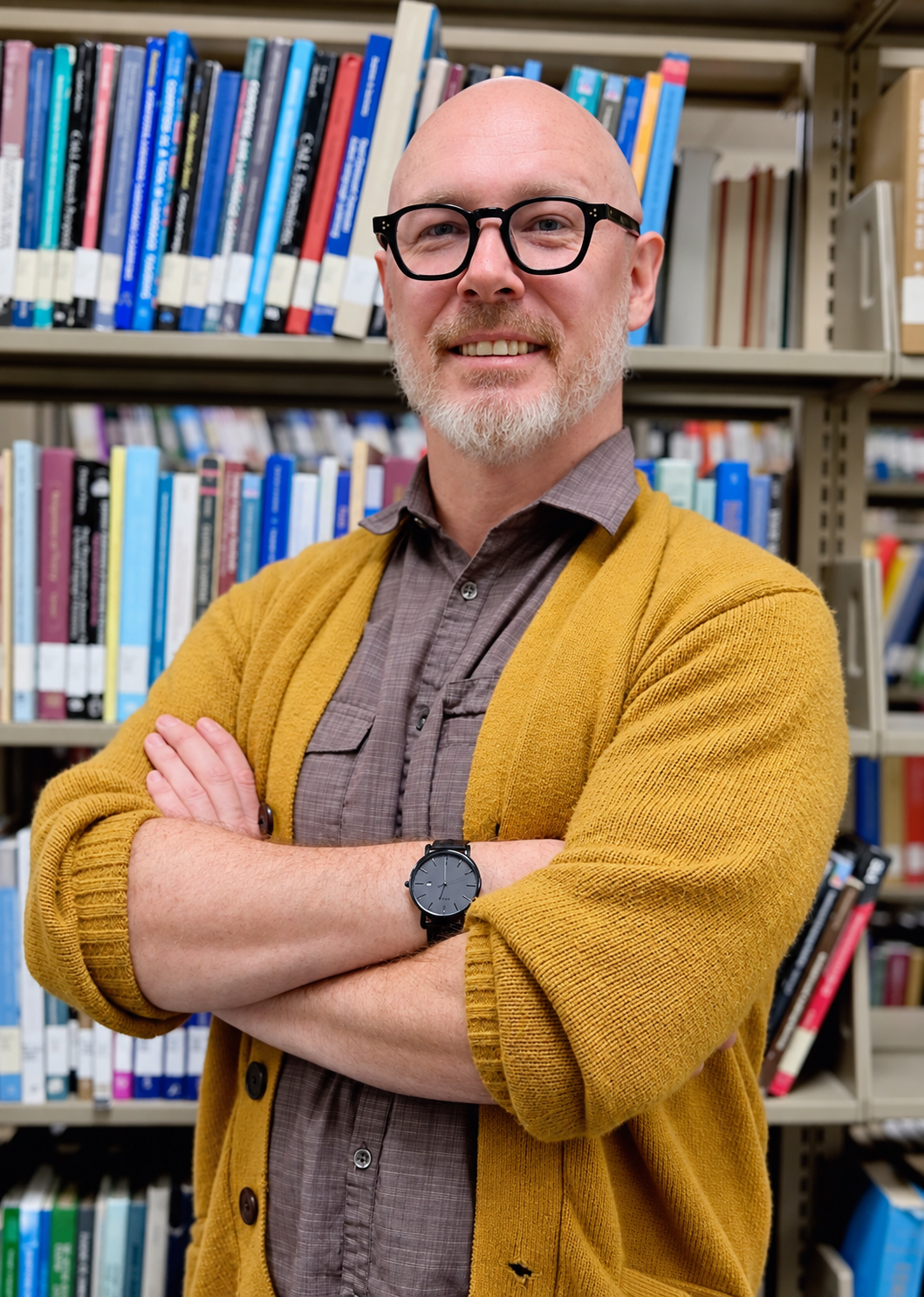
I’m Barron Smith-Swick.
I was raised in Minneapolis, Minnesota, by two arts educators. I, too, have worked as an arts educator in a program where I used the arts as a medium for introducing other required subjects, such as English, to high school students. I have also served as a mentor and instructor in other arts programs throughout the Minneapolis region.
What keeps bringing me back to teaching is the great joy I receive from generating interest in subject matter that might otherwise seem monotonous. Seeing that spark of interest come alive is a wonderful experience.
I have decided to bring my educational talents to Prague because it is such a vibrant city, rich in life and culture. I first experienced Prague at the age of 12, and its impression has remained with me ever since. For that reason, I have chosen to make it my home.
Prague has inspired me to use its vibrancy to meet the needs of English-language learners by using the historical and contemporary art of Prague and Czechia as a bridge to learning. This approach also gives me the opportunity to develop a deeper and richer understanding of the people, culture, and history of my new home.
When I am not teaching, I enjoy painting in my atelier, pursuing amateur photography, exploring museums, traveling occasionally, reading science fiction and other literature, studying psychology, swimming, and bicycling whenever possible.
Please scroll down to learn about my methodology.
My Methodology:
The V.I.S.T.A. Formula
It all begins with an idea. Letters are just ideas…symbols to build larger symbols, that is to say, words. Color and form are the same for visual art.
Both words and images convey ideas, but they engage us in different ways. When we combine language with visual experience, observation, interpretation, discussion, and personal reflection, we create multiple pathways through which meaning can be understood and remembered.
In my experience as an educator, I have found that multisensory learning can be especially effective in encouraging engagement, comprehension, and recall. Long before modern educational methods, humans used images and symbols alongside spoken language to communicate and preserve meaning. Egyptian hieroglyphs, for example, combined visual symbols with phonetic and conceptual meaning, while the long history of Chinese writing demonstrates another powerful relationship between visual form, language, and meaning.
My approach to language education builds upon a similar principle: we understand language more deeply when we connect it to something we can see, interpret, discuss, and experience.
This can be valuable even for advanced language learners. By using expressive imagery, visual art, cultural environments, and other media, students can create richer associations with new vocabulary and ideas. Language becomes connected not simply to a definition, but to an observation, an emotion, a conversation, a memory, and an experience.
This is the foundation of what I call the V.I.S.T.A. Formula.
As a high school instructor in the United States, part of my work involved introducing required areas of study through the Fine Arts. Through that experience, I discovered that engaging and expressive subject matter could provide students with an accessible route into complex ideas. It not only supported understanding and vocabulary development; it encouraged curiosity, discussion, and genuine participation.
What is V.I.S.T.A.?
The V.I.S.T.A. Formula is a five-stage approach:
View — What do you immediately see? Observe before explaining.
Interpret — What is happening in the image? Examine its structure, details, relationships, and possible meanings.
Speak — Put those observations and interpretations into language. Discuss, question, describe, compare, and express an opinion.
Transform — Imagine changing the image or idea. What would you alter to communicate something different? How would those changes affect its meaning?
Apply — Connect the discussion to the world beyond the image. How does this idea relate to your own experience, culture, environment, or life?
V.I.S.T.A. grew from my own educational experience, teaching practice, and continued research into visual and experiential approaches to learning.
My former educational mentor, who was Czech, first introduced me to educational ideas that eventually led me to explore the work of the great Moravian educator Jan Amos Komenský (Comenius). Komenský advocated learning through direct experience, observation, the senses, and the natural development of the learner—ideas that remain remarkably relevant to education today.
I have also found important parallels in contemporary approaches such as Visual Thinking Strategies (VTS) and the research traditions associated with Project Zero at Harvard Graduate School of Education. Although these approaches developed independently and have different purposes, they share principles that strongly resonate with my own teaching: careful observation, inquiry, interpretation, discussion, and the active construction of meaning.
V.I.S.T.A. takes these ideas into the language-learning environment.
And Prague provides an extraordinary classroom!
Its murals, sculptures, architecture, monuments, galleries, museums, public spaces, and centuries of visual culture give students opportunities to encounter language through the world around them. Instead of limiting language learning to vocabulary lists and exercises, we can use the city itself as a source of observation, conversation, interpretation, and discovery.
I look forward to exploring it with you.
Let’s use the landscape, art, and environment around us as educational tools—and turn the experience of seeing into the experience of speaking.